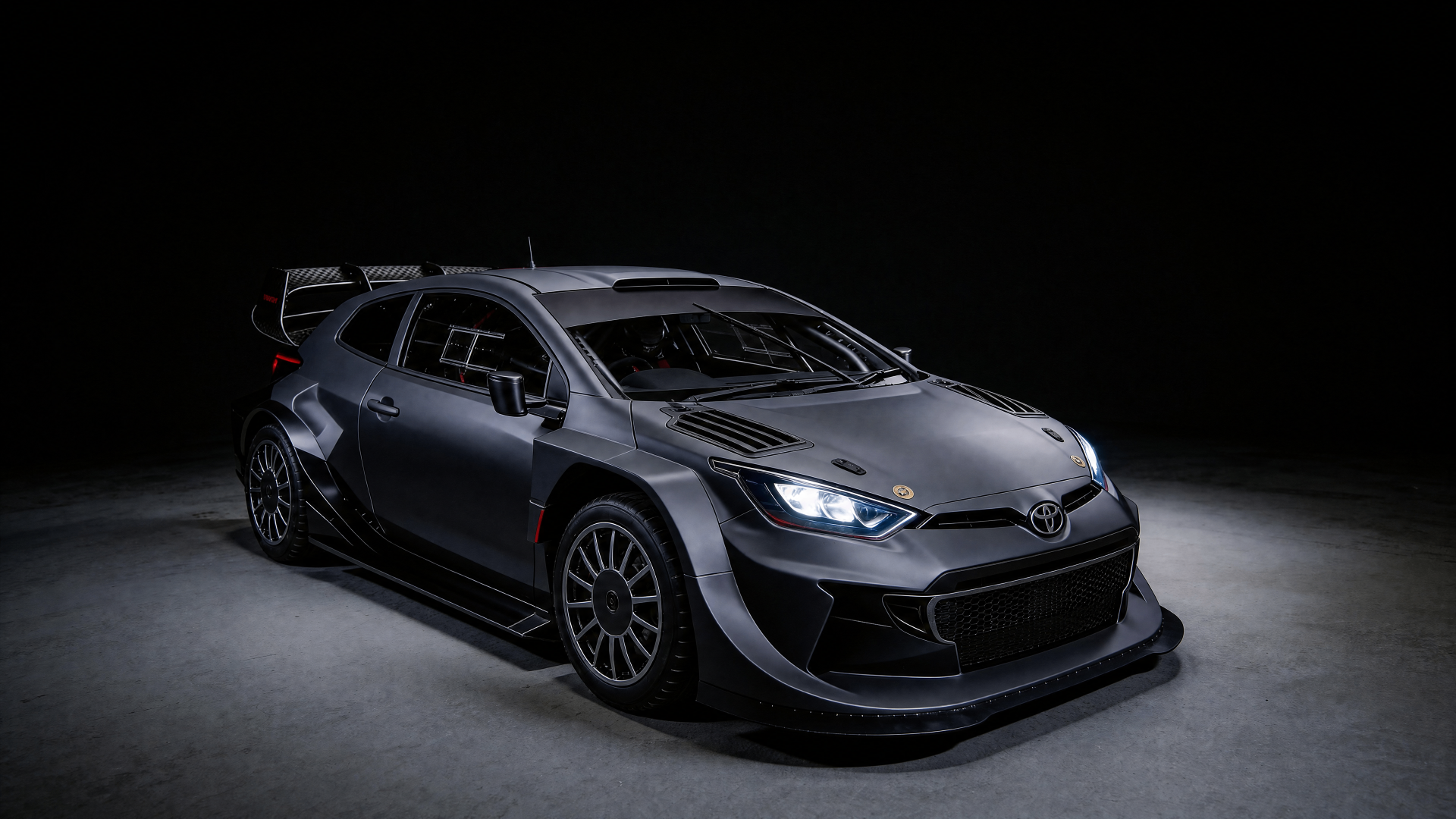
Rally cars break. That's not a bug — it's a design constraint. The best rally bodywork isn't the strongest; it's the fastest to replace at a stage-end service. That principle shaped every decision on this build.
The flare geometry was designed around modular repair. Each fender is a three-piece assembly: an inner arch liner that bolts to the chassis, an outer flare that clips into the liner, and a scuff plate on the leading edge that absorbs stone strikes without cracking the flare itself. A crew can swap a full flare in under six minutes with the car on jack stands. We tested that number in the shop before it left.
Sight-lines mattered more than we expected. Rally drivers spend their time reading pace notes and looking through corners that arrive at 140 km/h, and a fender that intrudes even slightly into peripheral vision costs time. We pulled the flare arc back by 18 mm from the aggressive stance the owner initially wanted, and traded visual drama for co-driver comfort. He hasn't complained.
Mud clearance is the last thing. On gravel, mud packs behind the fender liner and adds real weight — 8 to 12 kg over a wet stage isn't unusual. We designed a vented liner with three exit slots per side, angled to shed material at speeds above 60 km/h. The car left the last event of the season 3 kg heavier than it went in, dry.